
Consistent Content, Measurable Growth: How Apogee and Name Bubbles Built a Sustainable Affiliate Program
October 23, 2025
Two Free GPTs for Affiliate Marketing: One for Existing Programs, One for Brands Considering a Launch
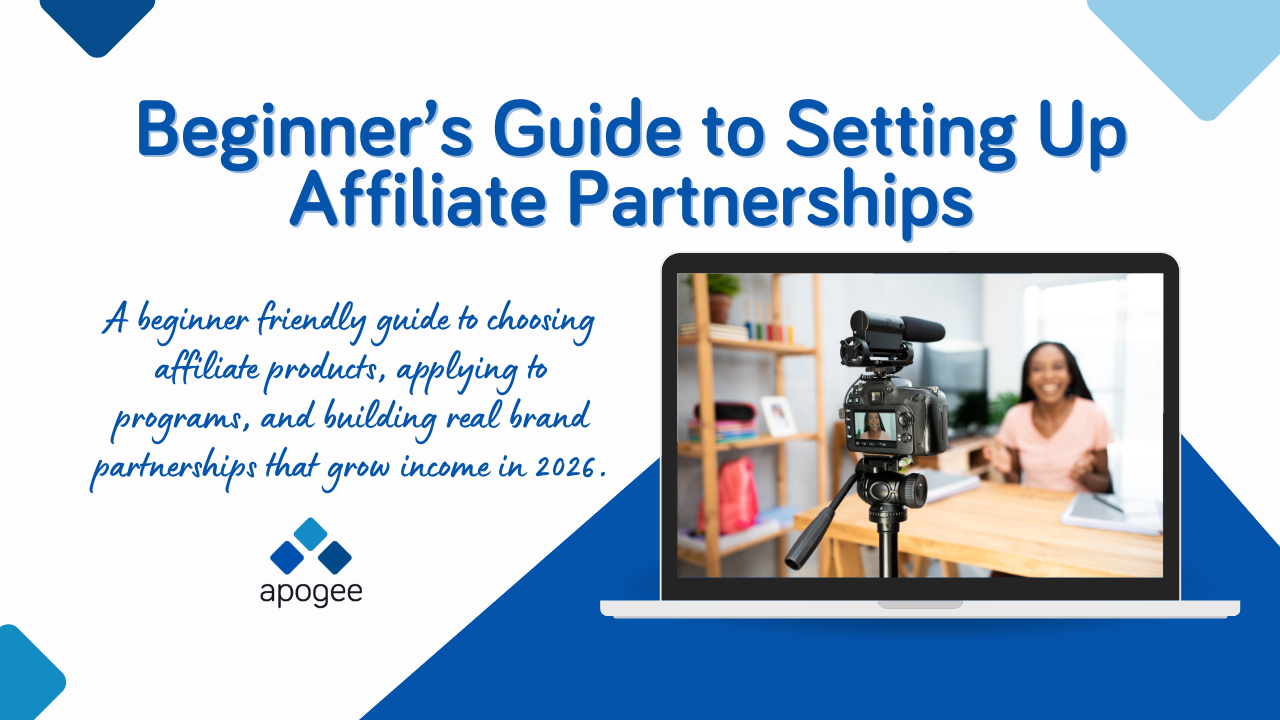
January 22, 2026If you’ve made a resolution to do more with affiliate marketing in 2026, this guide will help you set it up the right way from the start. Affiliate income works best when it is focused, intentional, and built around products you already use and talk about. This is not about just posting random links and hoping something converts. It is about building real partnerships that fit your content and make sense for your audience.
How to Choose the Right Affiliate Products to Promote
The biggest mistake beginners make is choosing too many products to promote. Not only is this overwhelming for you as a creator, but your audience will know that your promotions are not authentic. You only need about five core products or brands to focus on to really make an impact on your income. Anything more than that gets confusing, waters down your message, and turns your content into one long commercial. Your audience does not want that, and neither do brands.
Choose products you already use, genuinely like, and can see yourself talking about all year long. These should fit naturally into your current content and the content you plan to create in the future. If a product feels forced or only fits one random post, it probably does not belong on your core list. A true affiliate partnership means the brand shows up often and naturally.
Amazon Links vs Direct Affiliate Partnerships
Using Amazon for one-off links is perfectly fine, especially for filler products or items you mention occasionally. But your main five products should be treated as true partnerships with direct affiliate programs.
When you work directly with a brand versus Amazon, you often earn higher commissions and get better tracking. You also open the door to product reviews, early access, exclusive offers, and even sponsored collaborations. Brands want to work with partners who show up consistently and align with their values, not creators who drop a link once and move on to the next thing.
How to Find and Apply to Affiliate Programs
Most established brands run their affiliate programs on platforms like Impact or Awin. You can usually find this information in the footer of the brand’s website under links titled affiliate program, partners, or ambassadors.
When you apply, take your time in filling out the application, and remember there is a human affiliate manager on the other end who will be reading what you have to say. Be clear about who you are, what type of content you create, and why their product is a good fit for your audience. You do not need a massive following, but you do need clarity and alignment with the brand. The partnership needs to make sense for both sides.
What to Do If a Brand Does Not Have an Affiliate Program
If you cannot find a direct affiliate program for a product you love, that does not mean you are out of options. Subnetworks like Mavely often give you access to brands that do not run public programs or only work through closed networks.
This can be a great way to test interest with your audience before putting more time into outreach or negotiations. If a product performs well through a subnetwork, that data can support future conversations with the brand.
How to Add Affiliate Links to Existing Content
Once you are approved in the affiliate program and have access to your affiliate links, start with the content you already have. Go through your existing blog posts, emails, videos, and social captions and add links anywhere they are relevant and helpful.
If you run a blog, tools like PrettyLinks make this much easier by letting you manage and update links in one place. You should also add your affiliate links to your social profiles and link in bio tools like Linktree so people know exactly where to go when they are ready to buy.

Creating New Affiliate Content Without Feeling Salesy
After updating old content, you can start creating new content or resharing older posts with your updated links. Focus on content that feels useful and natural, not promotional just for the sake of promotion. Tutorials, routines, honest reviews, and behind-the-scenes tend to work well because they show how the product fits into real life.
The goal is familiarity, not pressure. When people see you using and mentioning a product consistently, trust builds over time. Your audience will want to purchase the product in order to have the same experience that you do, which is why it is important to show how the product helps make your life easier or better time and time again.
Tracking Affiliate Link Performance and Next Steps
About a week after your links go live, check your affiliate dashboard for activity. If you are receiving clicks, that is an important signal. It means your audience is interested enough to learn more about the product.
This is a great time to reach out to the affiliate manager and introduce yourself, mentioning that you are already driving traffic and would love to explore working more closely together. Even if you do not hear back right away, keep promoting the product as long as it fits naturally into your content. Repetition matters, and familiarity increases the likelihood of a purchase.
How to Talk to Your Audience About Affiliate Links
One of the most overlooked parts of affiliate marketing is being clear with your audience and giving direction on how they can purchase the product for themselves. Do not assume they understand how affiliate links work. Tell them directly to click your link when they make a purchase so you receive the commission.
Most people are happy to support creators they trust, but they need a reminder. Transparency builds trust, and trust is what turns clicks into long-term affiliate income.
Affiliate partnerships take time, but when you focus on fewer products, show up consistently, and treat each partnership as something you are building, the results compound. This approach alone will put you ahead of most people heading into 2026.